- April 8, 2026
- Posted by: admin
- Category: BitCoin, Blockchain, Cryptocurrency, Investments
A New York Times journalist just released a long-form investigation claiming that, after a year of intensive research, he finally uncovered the real identity of the creator of Bitcoin, Satoshi Nakamoto.
A NYT Journalist Claims To Have Unmasked Bitcoin’s Creator
A reporter trying to unmask Satoshi Nakamoto (and claiming success) is hardly news. Across 15 years of hunting, there have been countless of theories and tons of serious journalists assuring they had finally pinned down the real name of the creator of Bitcoin. However, this is the first time a top U.S. legacy outlet has directly named a Satoshi Nakamoto candidate: Adam Back, 55‑year‑old British cryptographer, Blockstream CEO, Hashcash creator, former Cypherpunk. The piece was written by John Carreyrou, an investigative reporter for the NYT who has won two Pulitzer Prizes.
This is also not the first time Back’s name is brought on as a Satoshi contendat. Back himself has denied this theory repeatedly, following years of YouTube sleuths, HBO docs and research reports circling his name. Carreyrou, however, found his denials so unconvincing that he used them as fuel to continue investigating on the connection.
The idea that Back is Satoshi came to Carreyrou after watching the 2024 HBO documentary “Money Electric: The Bitcoin Mystery”, that pointed at Hard Fork, a Canadian software developer. The journalist found the way Back tensed up in the documentary at the mention of his name amongst the Satoshi more convincing than the doc’s conclusion.
The E-Mail Lead
The other big idea Carreyrou had was to use the Satoshi Nakamoto e-mails that surfaced in the context of the UK COPA v. Craig Wright trial, where Wright tried to prove in court that he was Satoshi to assert copyright over the Bitcoin whitepaper –which clearly signaled that he wasn’t the creator of Bitcoin, as Satoshi Nakamoto disliked the idea of copyright and patents, and was a fierce advocate of open-source and public domains.
Emails Satoshi sent to other early Bitcoin adopters had surfaced before, but none came close in volume to the Malmi dump. If Satoshi was ever going to be found, I was convinced the key lay somewhere in these texts.
Amongst the submitted e-mails was correspondence shared between Back and Satoshi during 2008-2009, independently discussing Bitcoin’s design with Back, citing Hashcash and only learning about Wei Dai’s b‑money through Back’s recommendation —an incongruence Back himself has acknowledged, as Dai’s b-mobey was cited in the Hashcash whitepaper.
The Cypherpunk And Technological Leads
According to Carreyrou’s investigation, both Back and Satoshi sat in the same Cypherpunk lists in the 1990s, including the more obscure Cryptography list, trading emails about anonymized communication, digital cash and crypto‑anarchist ideals. The journalist provided evidence showing that Back sketched almost every core Bitcoin ingredient in the Cypherpunk list a decade before launch: decentralized e‑cash, independent nodes, resistance to government/censorship, and proof‑of‑work style spam prevention.
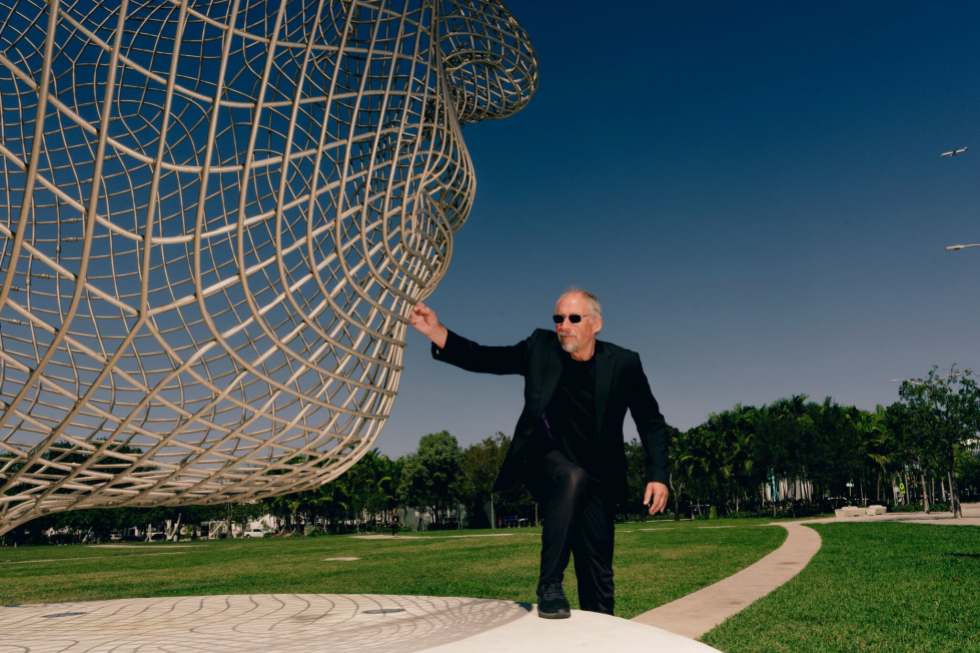
Back proposed combining his own Hashcash with Wei Dai’s b‑money idea, essentially the same recipe Satoshi later used for Bitcoin’s architecture. Hashcash itself is the direct conceptual ancestor of Bitcoin’s proof‑of‑work, and Satoshi explicitly cited Back’s paper in the 2008 whitepaper.
When Satoshi Nakamoto floated Bitcoin for the first time in Halloween 2008, Back disappeared from the conversations. However, Back got fully involved again after an Argentinian cryptographer made Satoshi’s fortune public on April 17, 2013.
For more than a decade, whenever electronic money was discussed on the Cypherpunks or the Cryptography list, Mr. Back had almost always chimed in, often with long, detailed posts. But when Bitcoin, the closest manifestation of the vision he had laid out, arrived, Mr. Back was nowhere to be found.
Back also holds a doctorate in distributed computer systems, matching the specialized skill set needed to design Bitcoin’s peer‑to‑peer network, incentive design and security model. He used the same programming language Satoshi used (C++) and worked professionally on securing computer networks and public‑key cryptography, which mirrors Satoshi’s toolkit.
The Linguistics Lead
Despite traditional stylometry not working, NYT’s Dylan Freedman used AI-based computational text analysis to filter thousands of old cypherpunk posts for British spelling, specific grammar tic patterns (like “also” at sentence ends, certain hyphenation mistakes and “its/it’s” slips). Back’s writing survived every filter, landing him in a tiny pool of eight final suspects.
Summing up, the investigation argues that the overlap of ideology, technical design, code skills, network position and language quirks is so tight that to call it “coincidence” stretches plausibility.
Back continued to deny being Satoshi when Carreyrou confronted him with this evidence during a Bitcoin conference held in El Salvador. Carreyrou, however, argues that Back’s way of denying it strengthened his suspicions once again.
Market Implications
Every serious “Satoshi theory” so far has eventually run into the same wall: nobody has produced cryptographic proof. Hal Finney and Nick Szabo had the right ideas at the right time, from reusable proof‑of‑work to “bit gold,” but both denied being Satoshi and never signed a message with early keys. Newsweek’s Dorian Nakamoto scoop, the Len Sassaman hypothesis and Craig Wright’s courtroom implosion all showed how fragile narrative‑driven cases are once they meet hard evidence. Even newer theories that cast Jack Dorsey or a shadowy “2010 megawhale” as the mastermind rely on stylistic forensics and on‑chain heuristics, not on movement of Satoshi‑era coins or a verifiable signature.
Many Bitcoin builders argue that not knowing Satoshi is a feature: it strengthens the “no founder, no CEO” commodity narrative. A persuasive mainstream story that “Bitcoin has a de facto founder” could embolden regulators and litigants to re‑open questions about control, intent and even securities‑style arguments, even if the crypto community rejects the premise.
Unless the NYT story is followed by an on‑chain move from Satoshi‑linked wallets or hard evidence, the market is likely to fade the headline and revert to watching funding, options skews and ETF flows. A genuine proof‑of‑identity event, however, would be a volatility shock with unknown tail risks.
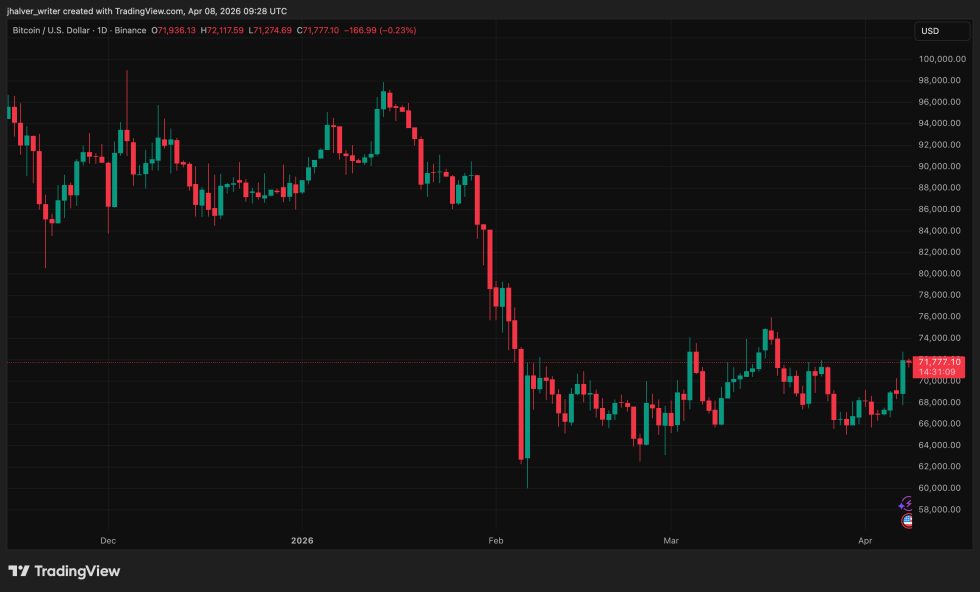
Cover image from Perplexity. BTCUSD chart from Tradingview.